

WeWork’s CIO on AI and Tech Overhaul
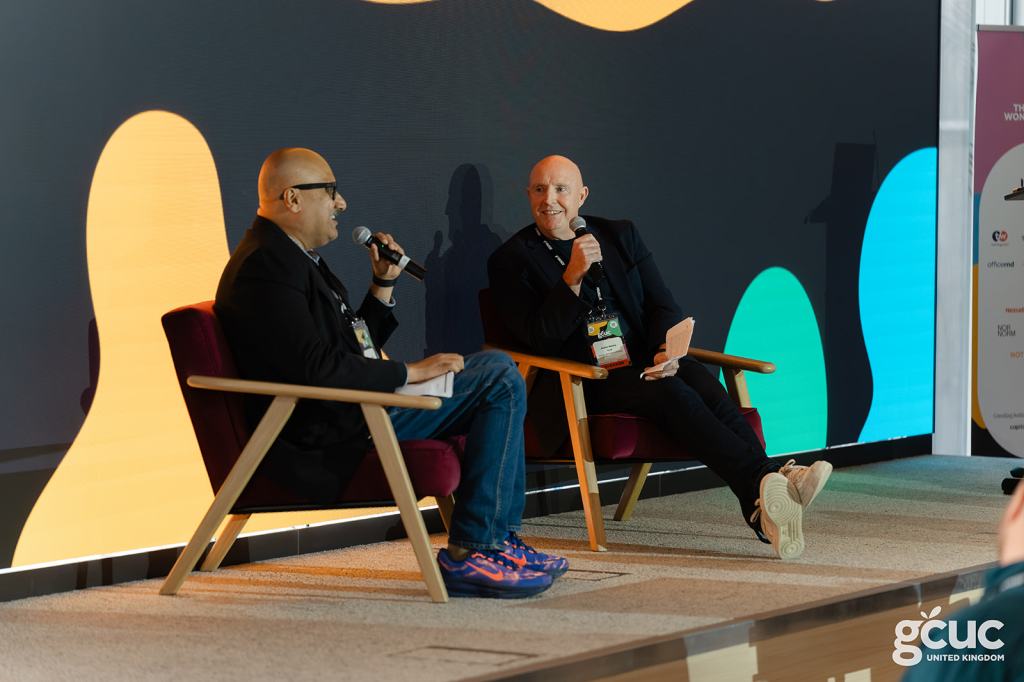
At GCUC London 2026, Yardi Senior Director Justin Harley sat down with Jigar Shah, WeWork CIO, for an illuminating discussion tracking WeWork’s phenomenal tech journey over recent years. This journey has seen a complete revolution in how one of the largest global flexible workspace brands approaches its tech stack.
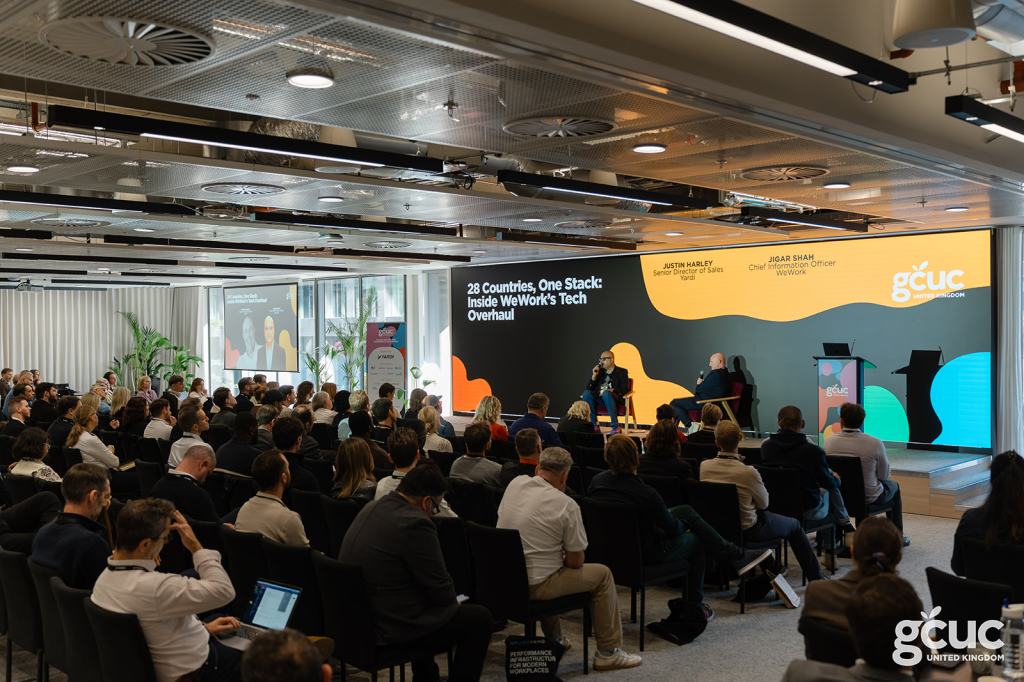
Perhaps the most insightful question was saved until the very end of the session. Jigar explained in this discussion how WeWork rebuilt its technology after a financial restructure, and with AI on everyone’s mind at the event, Jigar was asked for one piece of advice on how to make the most of it. Harley noted that many operators don’t have a CIO or any tech team at all, so where should they start?
Jigar’s answer – get everything you need to run your flexible workspace business in one place. Financials, community management, sales management, all of it. Work from a single source of truth and you can use AI effectively.
It sounds almost too simple, but the story behind it shows why he’s so sure.
Three hundred apps and a very big problem
It began in 2022, when WeWork asked Yardi to build WeWork Workplace, an app that lets members book desks and meeting rooms. It worked well and members took to it. However, this success raised a harder question: if one well-built app could significantly change the member experience, what was everything else behind it doing?
WeWork was running around 300 different applications in a micro-architecture setup. Jigar described them as oil and water – systems that sat side by side and never mixed.
WeWork famously spent its early years presenting itself as a tech company, but Jigar was clear about what it truly is, a hospitality and real estate business. Hospitality runs on speed, consistency and attention to the person in front of you. A tangle of disconnected tools works against all three. The goal of the journey WeWork has been on since has been simple to state and very hard to deliver – to unify those 300 applications into one single system.
Where do you start? A roadmap
When the job is consolidating 300 applications across nearly 30 countries, the obvious question is where to begin. Jigar’s answer was that a roadmap and the discipline to prioritise are everything. WeWork worked through it in order:
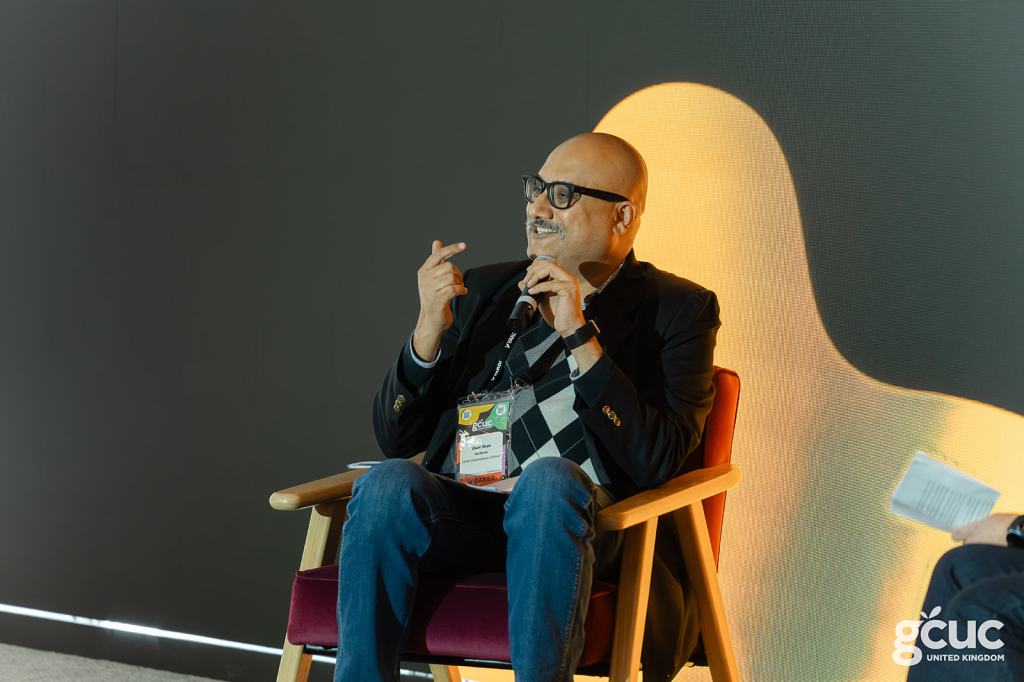
- First, a single set of financials. Coming out of restructuring, WeWork was a much smaller organisation that had to make decisions fast. In the old setup, a basic question to the CFO’s team could take days, sometimes weeks, because the numbers lived in systems that couldn’t talk to each other.
- Second, a seamless experience for customers. Booking and using a space had to feel like one joined-up experience, not the output of a dozen back-end systems.
- Third, more functionality and a better workflow for employees. Front-of-house staff used to run six or seven applications to do their jobs. Now they use one.
Consolidation has also changed the speed of decision-making. Questions that once took a team days to answer now take minutes and people can slice and dice the data themselves rather than queueing for a report.
The hard part is people
The technology is only half of it. With so many spaces across so many countries, getting people to adopt a new system is hard and it is also what decides whether the new architecture pays off. Change management, Jigar made clear, is the real work.
Jigar leans heavily on general managers and community teams to carry the message to the front line, because everyone working in a space needs to understand why things are changing. Also, the relatively high level of churn in front of house staff means that message needs to be regularly passed on to new employees.
One system, one data lake and a real shot at AI
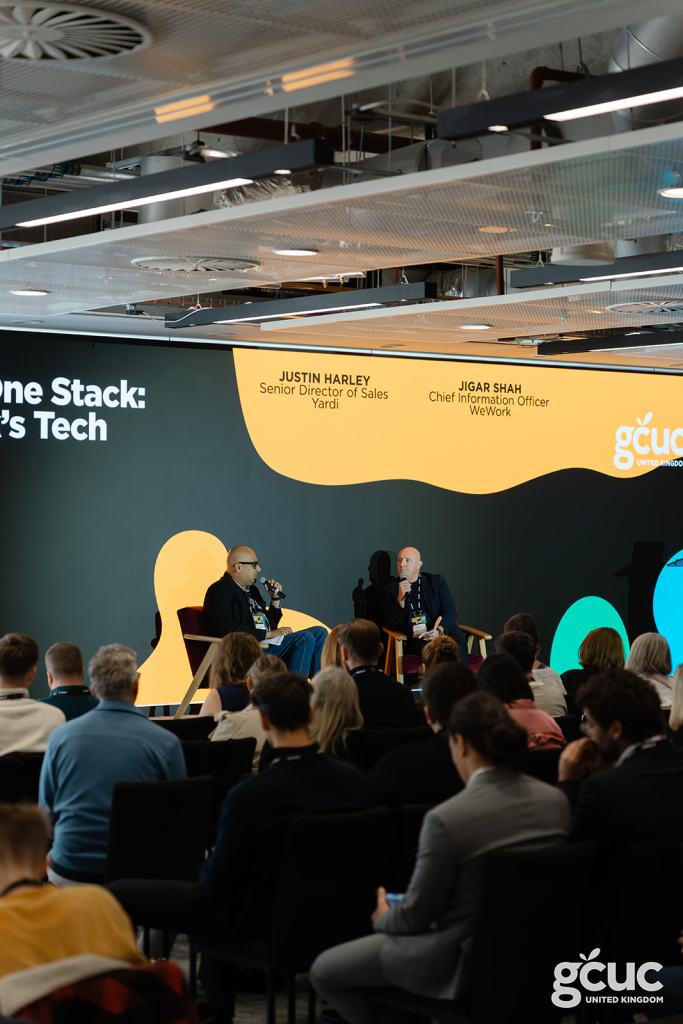
Predictably, AI was a hot topic at the event and a show of hands in an earlier session suggested the room saw it as a game changer. Jigar’s point was that AI is only as good as the data behind it. That is why a single system was so vital for WeWork – good data is a prerequisite for AI.
Today, WeWork has a single source of truth and a single data lake behind everything. That puts it in a position to make the most of AI, and Jigar’s number one goal is to use it to create efficiencies for the customer. WeWork can look at how members use its spaces and change those spaces in response. If the coffee station is overwhelmed at 11am on a Thursday, or the bathrooms are stretched, you can fix it with evidence instead of guesswork. The plan is to use AI to do much more of exactly that.
The payoff
The results are hard to argue with:
- Unifying the tech stack will save WeWork 2% of its total revenue.
- WeWork has achieved profitability for the first time in its 16-year history.
Jigar added that the savings aren’t being sat on. They’re going back into the business, especially into the front-of-house experience, which is expensive to get right and impossible to fake in hospitality.
What the WeWork project meant for Yardi Kube
The project also shaped the platform at the centre of it. Yardi Kube had already been supporting flex operators as a single system for around 15 years, so it wasn’t a newcomer. But working with WeWork put it under a different kind of pressure.
Jigar said that learning about hospitality and community through the project made a significant difference to how Yardi Kube, the product, developed. Running a global network means every change involves many teams in many countries, each with its own needs, and any platform serving that network has to cope with that reality.
The lesson applies to flex operators of any size. Yardi Kube has been tested against one of the most complex footprints in the industry, so it’s built to handle the essentials well: centralised billing, membership, and customer data and reporting that takes minutes rather than a fortnight of manual effort.
The advice: start with one source of truth
If you take one thing from Jigar’s session, it is this – before you invest in AI tools, put the foundations in place. That means having your financials, community management, sales management and everything else you need to run your coworking or flexible workspace business, all in one place.
You don’t need WeWork’s scale or a dedicated CIO to start. Once everyone is looking at the same information, decisions get faster, teams stop working from conflicting versions of the truth and AI has something solid to work with.
Images provided by GCUC.

Sammy Dukes
As Yardi’s marketing campaign specialist for residential and coworking, Sammy Dukes develops content and campaigns that bring real estate technology to life for property professionals. Sammy crafts engaging narratives that support property managers, operators and owners across a rapidly evolving market.