

Flex and the City: The Big Debate
At a time when flexible workspace operators are facing rising costs, margin pressure, changing occupier expectations, and increasing competition from landlords, Yardi partnered with Flex and the City to host one of the industry’s most candid debates yet.
Moderated by Justin Harley, senior director at Yardi, the session explored how operators can remain profitable, scalable, and differentiated in a rapidly evolving flex market.
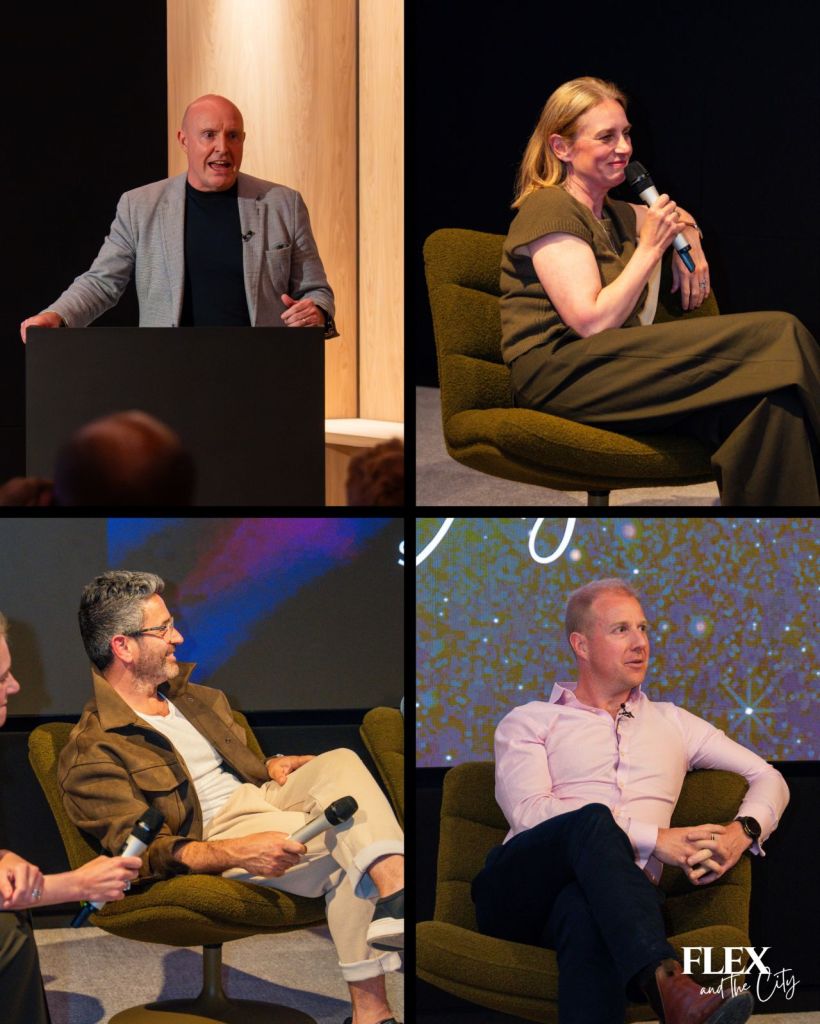
The panel brought together some of the sector’s leading voices:
- Emily Smith, CEO, Argyll
- Ron Rosenblum, CEO, Canvas
- Daniel Howard, Partner & Head of Occupier Services, Compton
- Johnny Bray, CCO, Office Freedom
- Luke Philpott, Founding Partner, Made
What followed was a frank and wide-ranging discussion covering profitability, operating models, broker behaviour, occupier demand, AI, and what the flex sector needs to do next.
Five Themes That Defined the Debate
- Profitability pressure is increasing across the flex market
- Flex is now mainstream real estate, not an alternative product
- Landlords and operators are increasingly converging
- Technology and AI are becoming operational necessities
- The industry still lacks standardisation and accountability
The Market at an Inflection Point
Justin opened the discussion with a clear challenge to the panel: flexible workspace is now firmly embedded in corporate real estate strategy, but operators are facing an increasingly difficult balancing act.
Occupancy levels remain relatively resilient across many markets, yet desk rates are not growing at the same pace as operating costs. Rising employment costs, business rates, fit-out expenses, and financing pressures are forcing operators to rethink how sustainable growth is achieved.
Emily Smith addressed the issue directly:
“There are definitely more challenges in terms of business rates, cost of employment – but there are also huge advantages we’re all benefitting from right now.”
She highlighted AI-driven efficiency as one of the biggest opportunities available to operators looking to do more with less.
The conversation repeatedly returned to a central theme: operators can no longer rely on occupancy growth alone. Margin protection increasingly depends on operational efficiency, automation, and access to better real-time data.
Ron Rosenblum took a broader view, comparing the current wave of technological change to the industrial revolution itself. Technology, he argued, is not replacing the human element that defines successful flexible workspace. Instead, it is freeing teams to focus more on hospitality, experience, and customer relationships.
Technology, AI and Operational Scale
While the debate focused heavily on business models and market dynamics, technology emerged as a recurring undercurrent throughout the evening.
The panel broadly agreed that AI is unlikely to replace the human experience that defines successful flexible workspace. Instead, the opportunity lies in removing friction: automating repetitive tasks, improving customer responsiveness, streamlining operations, and giving operators better visibility across their portfolios.
As operators face rising staffing costs and increasing customer expectations, technology is increasingly viewed not simply as infrastructure, but as a strategic lever for profitability, scalability, and service consistency.
The discussion reflected many of the conversations Yardi is having with flex operators globally as the sector evolves from rapid growth into operational maturity.
The Model Question: What’s Sustainable?
One of the sharpest discussions of the evening centred on operating models.
With rising rents, compressed margins and increasing competition for management agreements, the panel debated which structures are genuinely sustainable in the current market.
Daniel Howard offered a blunt assessment:
“Desk rates have stagnated.”
He noted that, in some cases, average desk rates on completed deals had actually fallen year-on-year, despite rapid increases in central London rents.
The result is growing pressure on the traditional lease model. As capital values improve for conventional leased assets, some landlords are reconsidering whether flex operators remain the optimal long-term strategy for their buildings.
The panel broadly agreed that management agreements remain attractive in theory due to shared risk and lower capital exposure, but in practice they are becoming harder to secure in core locations. Increasingly, operators are competing for secondary assets or fringe-market opportunities.
Emily Smith highlighted the advantages of ownership within Argyll’s portfolio, noting that owning a significant proportion of buildings provides a meaningful competitive buffer.
Ron Rosenblum offered perhaps the evening’s most pragmatic observation:
“It’s less about the model itself, it’s about mindset. It’s all about partnership.”
The emphasis, he argued, should be on creating aligned incentives between operators, landlords, and occupiers.
Can Operators Compete with Landlords Going Direct?
With more landlords entering the flexible workspace market directly, the question of competitive advantage became unavoidable.
The panel’s view was measured but realistic: landlords may possess a structural cost advantage through ownership, but operating flexible workspace successfully is significantly harder than many initially expect.
Daniel Howard observed:
“Anecdotally, a lot of them who dip their toes in end up knocking on our door to work together after finding it more challenging than expected.”
Ron Rosenblum argued that many landlord-led flex offerings naturally cater toward larger occupiers, while the broader SME and growth-business market still requires specialist operators capable of serving businesses of every size — from four-person startups to scaling enterprise teams.
A recurring theme throughout the discussion was the importance of ecosystem thinking. Landlords increasingly want to retain occupiers throughout their lifecycle, from startup to scale-up to long-term tenancy. Operators are uniquely positioned to help facilitate that journey.
The Managed Space Debate: What Does “Managed” Actually Mean?
Luke Philpott brought a different perspective to the debate through his experience in outsourced facilities management and managed office delivery.
He argued that the broader flex market should feel fortunate in the current environment:
“When businesses are faced with risk and concerned about long-term decisions, the only thing they look for is flexibility.”
However, Luke also highlighted a growing market confusion problem: the word “managed” now means different things to different people.
“There are probably about a dozen different types of managed and landlords, brokers and occupiers are all working off different definitions.”
His conclusion was clear: the sector needs a more coherent and standardised language around managed workspace if occupiers are to compare products effectively.
Daniel Howard agreed, noting that what most occupiers ultimately want is simplicity: a space they can move into with minimal operational burden and exit just as easily.
A Frank Discussion on Professional Responsibility
One of the evening’s more candid exchanges focused on accountability and professional standards within the sector.
The panel explored who ultimately bears responsibility when poorly structured leases or unsuitable workspace strategies create challenges for occupiers further down the line.
Daniel Howard was direct:
“I think there is a professional obligation. The attitude of ‘it’s not my problem because it doesn’t involve me’ is a wider issue across the commercial sector.”
The discussion evolved into a broader conversation around regulation, accountability, and governance within the industry.
Several panellists agreed that as flexible workspace matures into a larger institutional asset class, expectations around advisory standards, transparency, and reporting will inevitably increase.
What the Industry Needs to Do Next
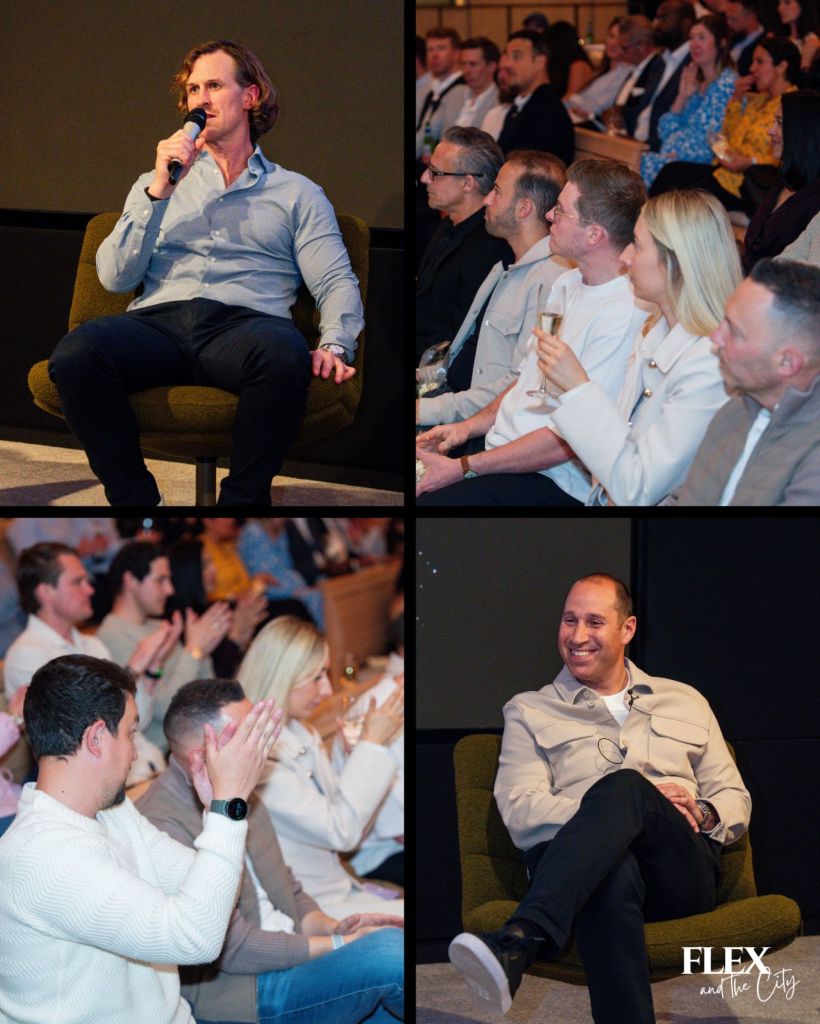
Justin closed the debate by asking each panellist for one thing the flex industry must improve.
The answers were revealing.
Emily Smith – Standardise Data and KPIs
Emily argued that the sector urgently needs more consistent operational metrics and reporting standards.
Hospitality has RevPAR. Multifamily residential has established operational benchmarks. Flex, she argued, needs a shared framework that operators, landlords and investors can all understand.
As institutional capital continues flowing into flexible workspace, data transparency and operational reporting are likely to become increasingly important differentiators.
Daniel Howard – Raise Professional Standards
Daniel called for stronger regulation and accountability across advisory services within the industry.
With significant commercial decisions and fees involved, he argued that the sector needs clearer professional standards for agents, brokers, operators and advisors alike.
Luke Philpott – Define “Managed”
Luke reiterated the need for consistency around terminology.
Without shared definitions, landlords, occupiers and brokers risk comparing fundamentally different products under the same label.
Johnny Bray – Push Back on Poor Broker Behaviour
Johnny Bray addressed the issue of inflated broker fees and operator dependency on referral networks.
“You’re the ones paying the fees, you’re the ones in control. Don’t be afraid to say no.”
His point resonated strongly across the room: operators themselves ultimately hold more leverage than they sometimes believe.
Ron Rosenblum – Start with the Client
Ron brought the discussion back to fundamentals.
Too often, he argued, buildings are designed, fitted and operated based on assumptions rather than genuine customer needs.
“We need to ask the client, how can I help? What do you truly need? And then do that for them.”
Final Thoughts
What made the debate particularly valuable was not simply the candour, but the shared recognition that flexible workspace has now moved beyond the question of whether it is the future of the office market.
That debate is over.
The focus now is on operational excellence: how to run flex profitably, efficiently and sustainably while continuing to deliver exceptional customer experiences.
For operators, landlords, brokers and investors alike, the next phase of the market will likely be defined by better data, stronger operational platforms, clearer standards and closer alignment with occupier needs.
As the flex market matures, operators are increasingly focused on profitability, operational efficiency, customer experience and scalable growth. Yardi is proud to support many of the industry’s leading workspace providers with technology designed to help flex businesses streamline operations, improve visibility and create exceptional occupier experiences.

Sammy Dukes
As Yardi’s marketing campaign specialist for residential and coworking, Sammy Dukes develops content and campaigns that bring real estate technology to life for property professionals. Sammy crafts engaging narratives that support property managers, operators and owners across a rapidly evolving market.